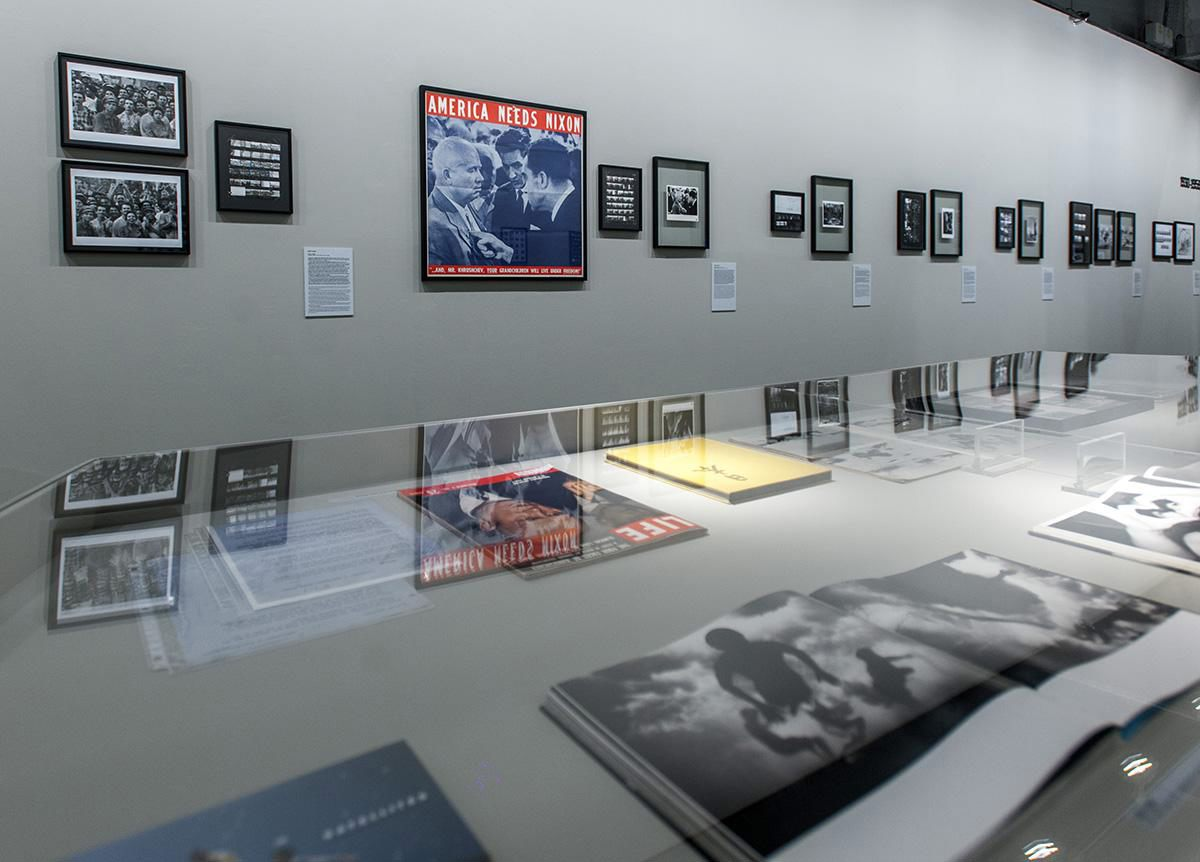
Installation view of Magnum – Contact Sheets, Istanbul Modern, 2015. Image source: Istanbul Modern.
The chosen photograph has an unfair advantage. We meet it after somebody has decided it deserves our attention. Its neighbours usually stay home.
A contact sheet lets some of them back into the room. Small exposures sit beside one another, often with the repetitions that a finished presentation would remove. A gesture almost settles. A person looks away. The photographer tries again. Sometimes very little appears to happen, which is quite a useful thing to be allowed to see.
In a 2012 interview for the International Center of Photography's library, curator Kristen Lubben explained that a strong photograph did not necessarily come with an interesting contact sheet. Selecting material for Magnum Contact Sheets therefore meant attending to the working record as well as the celebrated result. That distinction is worth pausing over. The picture that succeeds on its own and the sequence that tells us something about making pictures may be two different things.
This isn't quite the same question as arranging finished images into a story. It happens earlier: which image becomes a finished image at all? A photograph can fall out of consideration before anyone begins thinking about where it should sit on a page.
Imagine three hypothetical frames of the same person. In one, the expression is clear but a hand looks awkward. In another, the hand settles and the face closes. In the third, both seem relaxed, but something at the edge distracts. The choice might depend on what the picture is for, what matters about the person, and how much ambiguity the editor is willing to leave. None of those questions is solved simply by finding the sharpest frame.
There is comfort in seeing alternatives, although it can turn into a slightly smug kind of comfort: even famous photographers took photographs they didn't use. True enough. More interesting is how they recognised what to keep, and whether that recognition changed later.
A contact sheet doesn't grant complete access to the answer. It shows recorded exposures, not every thought between them. Marks may belong to different stages or different people. A gap in the sequence is not automatically a dramatic hesitation. Even a working document needs context, especially when we are tempted to read it as a personality test.
Istanbul Modern's 2015 Magnum – Contact Sheets exhibition placed these materials alongside photographs, publications and first-person accounts. Its installation view shows small grids on the wall and open books in cases. That combination matters: an image has a life in use as well as a moment of selection. The route from negative to page is part of what we eventually call the photograph.
Digital editing still involves choosing, of course. What is less obvious to a later viewer is which alternatives survive and how the decisions remain attached to them. A five-star rating is helpful today. Years later, without the reason, it can look like a very firm opinion left by somebody who has gone out.
There is something worth keeping there: enough of the surrounding work to make the choice discussable again.