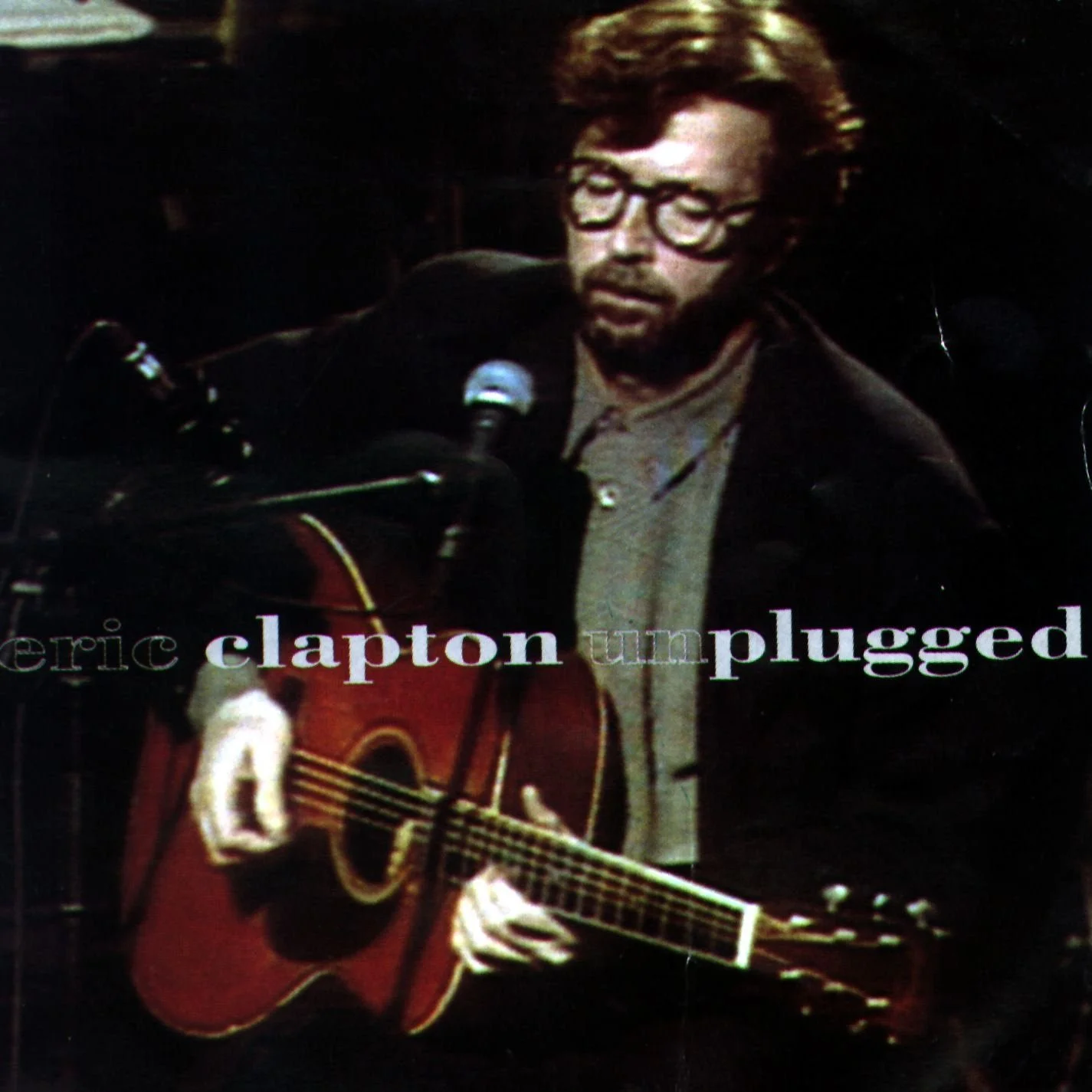
Eric Clapton, Unplugged (1992), album cover. Album-cover image: Eric Clapton official store.
The word “acoustic” can sound like a modest promise. Same song, quieter guitar, perhaps a stool. Eric Clapton’s Layla on MTV Unplugged takes rather more liberties than that.
The original appeared on Derek and the Dominos’ Layla and Other Assorted Love Songs in 1970. By the time Clapton recorded Unplugged at Bray Studios on 16 January 1992, he was returning to a song with an extremely recognisable entrance. That guitar figure tends to arrive ahead of everything else you remember about it.
For the acoustic performance, the song became a shuffle: a loose, swinging rhythm in place of the original’s forward rush. You can follow the tune, yet the emotional pace has changed. The words have more room around them. What once sounded urgent can feel like a story being told after the event, when everyone has finally sat down.
That last part is a way of hearing it, of course. An arrangement cannot tell us what someone has resolved in their private life. But it can change the distance from which a song seems to be speaking. A singer can keep the words and alter how insistently they reach us.
There is something appealingly risky about doing this to your own famous song. The audience has brought its memory of it. Some of that audience would quite reasonably like the riff back. You can almost imagine it waiting in the wings, wondering why it wasn’t called.
The 2013 expanded edition offers another useful way into the session: alternate takes, outtakes and rehearsal footage. Those versions put the choices back into a record that can otherwise feel inevitable.
The interesting comparison is where the same line lands in each arrangement. Does it hurry past, hang in the air, or sound surprisingly matter-of-fact? That is enough to keep two versions of one song in the collection. There needn’t be a winner.