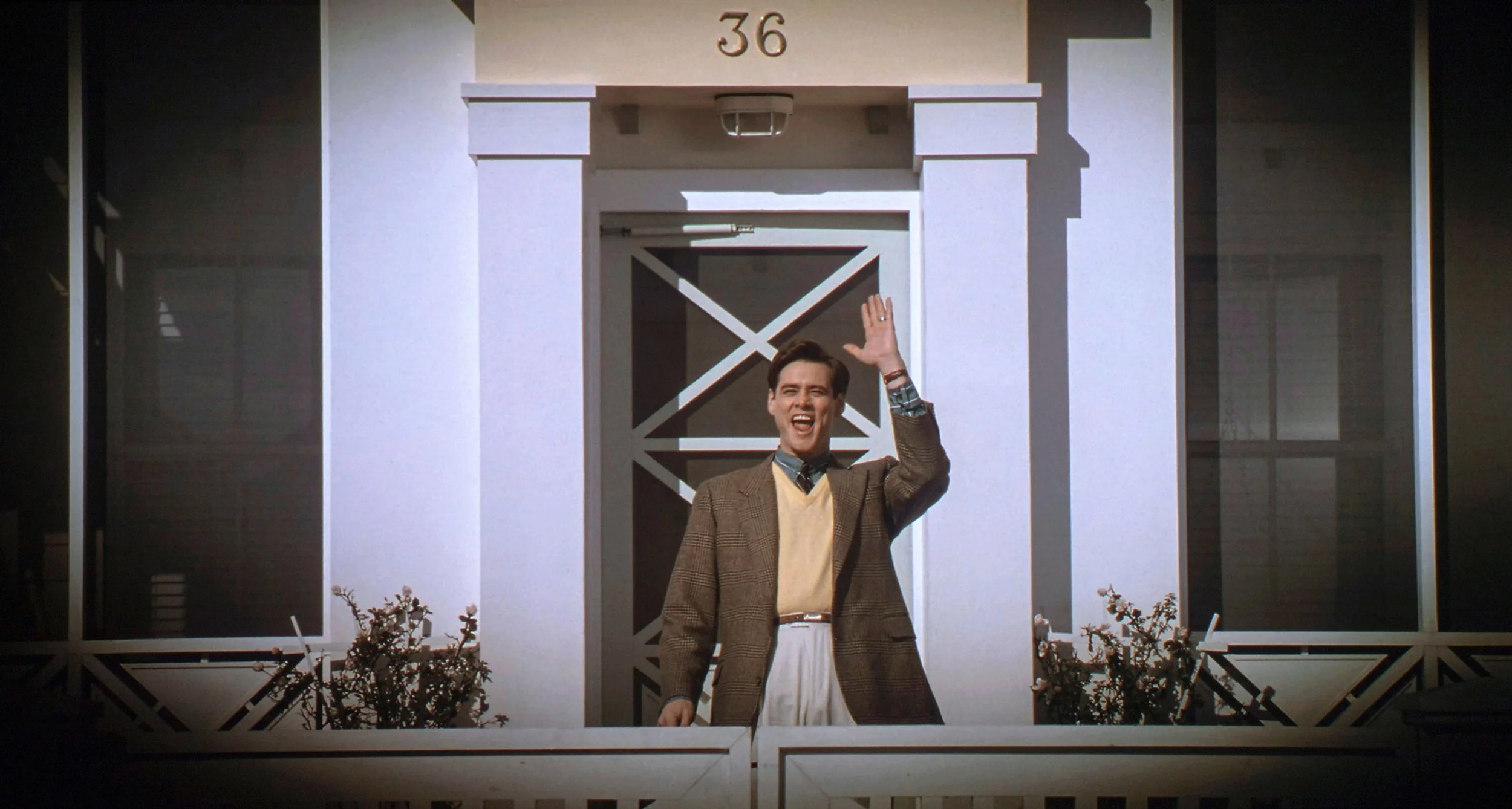
Truman smiles and waves from the porch of his home in The Truman Show (1998). Frame courtesy of Paramount Pictures, via High-Def Watch.
The morning in The Truman Show looks suspiciously well organised. The houses are bright, the sky is blue, and the street looks ready for a brochure.
Truman walks into an attractive seaside town without knowing that his life is a television programme. We know. So a perfectly pleasant street becomes unsettling before anything particularly alarming has happened.
The light is doing a surprising amount of the work. Director Peter Weir and cinematographer Peter Biziou borrowed from the glossy appearance of commercials and sitcoms. On location in Seaside, Florida, the crew added substantial fill light to soften the harsh shadows of the real sun. The intention was a world that felt slightly too controlled, while remaining believable enough for Truman to live in it.
What interests me here is how brightness can do something other than make everything cheerful. Here, visual reassurance begins to feel like pressure. Everything is being presented as fine, all the time. There is very little room for Truman to feel otherwise.
You can recognise a smaller, more ordinary version of that pressure in the attempt to look permanently composed. The professional photograph that must somehow communicate confidence, warmth, competence and an excellent work-life balance. Preferably before lunch.
There is nothing wrong with wanting a lovely picture. Dressing carefully, choosing flattering light and showing a good version of ourselves can be enjoyable. It becomes more complicated when that version starts to feel like a performance we have to maintain.
The film takes this to an outrageous extreme: Truman's surroundings have been arranged for the pleasure of an audience, and he has never been asked whether he wants to participate. The pretty street is part of the problem because its attractiveness helps make the arrangement seem benevolent.
The question I'm left with for ordinary photographs is much smaller. Does the person recognise themselves in what is being made? Have they had a say in the expression, the clothes, the mood? An immaculate image can still be honest when the person in it has chosen that presentation.
I don't intend to become suspicious of every sunny street. But I do want to remember to ask who arranged this particular version of a good life, and how much choice the person in the picture has had. That is quite a lot for a pleasant morning walk to carry.