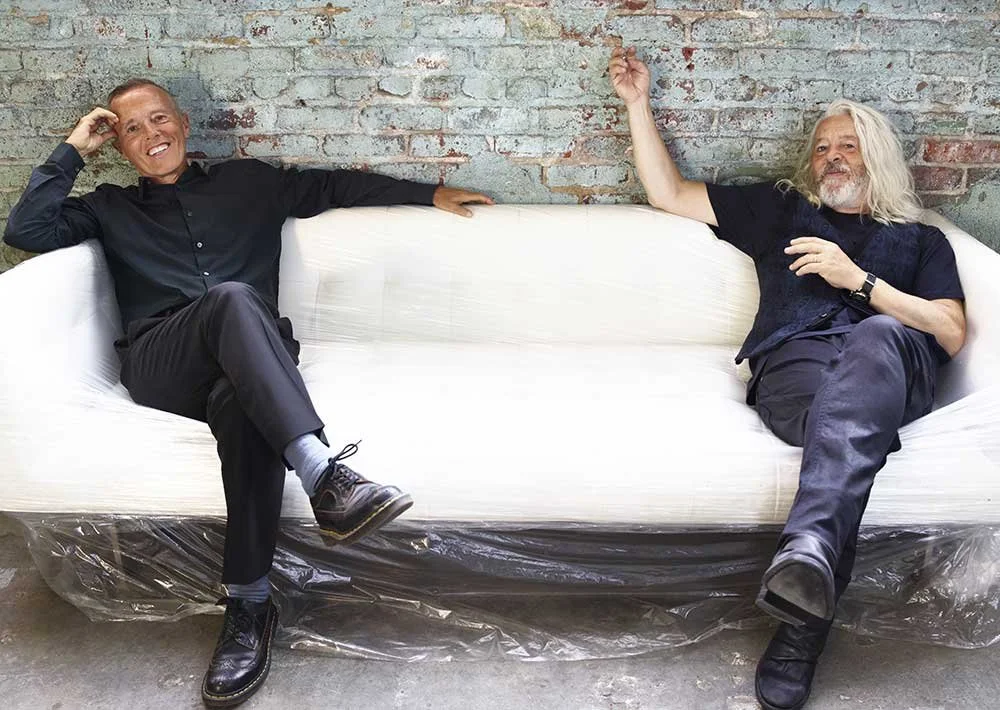
Curt Smith (left) and Roland Orzabal of Tears for Fears. Photo: Frank Ockenfels. Source: Songwriting.
It is perfectly possible to tap a foot through Mad World before paying much attention to the words. The 1982 Tears for Fears recording gives that foot plenty to do. Then the singing catches up with you. This is turning out to be a rather complicated song to dance to.
Roland Orzabal wrote it; Curt Smith sang it. The single arrived in September 1982, a few months before The Hurting. There is movement everywhere: a firm beat, a springy bass line, synthesizers with plenty to contribute. Smith sounds restrained, almost detached in the middle of it. The music keeps going while the person singing is still trying to work out what everybody is rushing about for.
Orzabal told Songwriting that he wrote Mad World on acoustic guitar while looking out at people going to work. The electronic arrangement came later. A small detail worth keeping: a song that sounds so thoroughly at home among synthesizers began quite happily without them.
Nearly twenty years later, Michael Andrews and Gary Jules made their version for Richard Kelly's Donnie Darko, released in 2001. Andrews, the film's composer, devised the piano arrangement; Jules sang. The UK single did not arrive until 15 December 2003. So both years belong to this recording's story: 2001 for its appearance in the film, 2003 for the UK single.
What becomes immediately noticeable is the space around the voice. The piano figure repeats, notes have time to fade, and Jules sings quietly, without pushing the feeling at us. Attention settles on words that the original's rhythm might have carried us past. Everyday routines, school, the sense of not quite belonging: there is more time to register each of them.
There was a practical cinematic reason for that restraint. As Andrews explained in The Ringer's oral history, he wanted the song to share the character of his score. Near the end, the film looks in on several characters in their bedrooms. Some wake; others lie awake. Their familiar roles recede and we see people troubled by something they cannot quite account for. One voice connects these separate rooms.
It is possible to get thoroughly entangled in the workings of time in Donnie Darko. This scene doesn't require a detailed diagram. Faces and a voice are enough. After so much strangeness, the quiet gives us a moment simply to stay with these people.
The recording then became the UK's Christmas number one, beating The Darkness's festive single. A fairly subdued choice for a week with so much compulsory sparkle. Christmas listening evidently has room for a little bewilderment, too.
Going back to Tears for Fears afterwards is particularly interesting. The rhythm is less able to distract from the words. It can sound restless itself, rather like the need to keep a day going when you haven't quite worked out what to make of it. The quieter recording leaves more to hear in the busier one. The foot will probably still be tapping.