A selection of breads from Bukhara, Tashkent and Khorezm, photographed for Eric Hansen’s 2015 AramcoWorld feature. Photographs: Eric Hansen / AramcoWorld. Image source
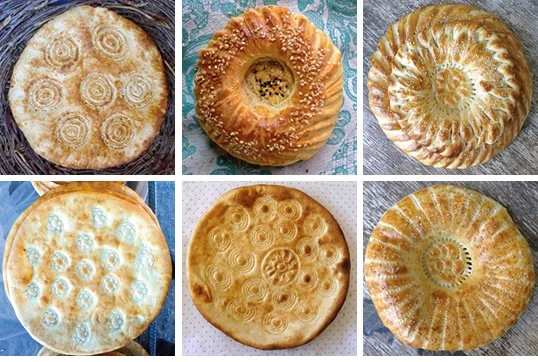
A round of Uzbek non can look surprisingly dressed up for something that is about to disappear at lunch. Concentric rings, small flowers, a centre worked over with careful dots. The temptation is to call all of it decoration and reach for a piece.
The chekich, the bread stamp that presses a pattern into the dough, also has a job to do. The stamped centre stays flatter as the outer rim rises. The pattern helps make the loaf’s shape. In his reporting on Uzbek bread, Eric Hansen describes both the stamps and the considerable variation between local breads. There is no single pattern doing duty for the whole country.
That is what makes the photographed selection worth lingering over. Some loaves are covered in small repeated circles; others gather the detail around a central hollow. A change in the spacing changes the character of the whole thing, even before we get to the sesame seeds.
The ordinary scale of it is lovely. Somebody has made decisions about rhythm and texture on an object that doesn’t need to last. A loaf doesn’t have to survive for a hundred years to justify a little care. Though an especially good one may have difficulty surviving until dinner.