Kodak DCS 100 system, based on the Nikon F3, 1991. Swiss Camera Museum, Vevey. Image source: Swiss Camera Museum, Vevey. Image source
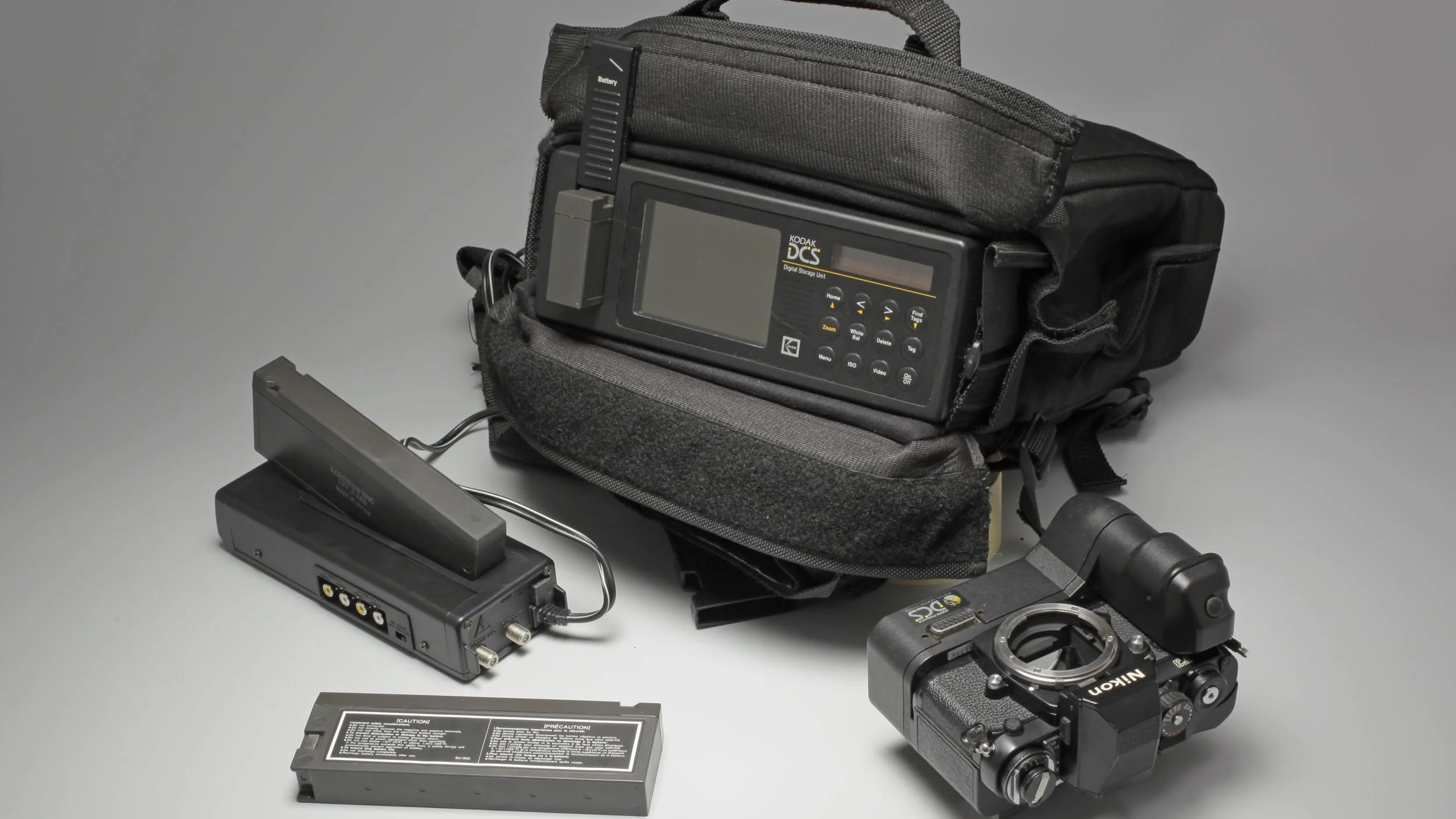
The Kodak DCS of 1991 makes a modern complaint about a bulky camera bag look slightly ungrateful. The camera had a bag of its own to help it remember the photographs.
Kodak fitted a Nikon F3 with a 1.3-megapixel sensor. A cable connected it to a separate unit containing storage, batteries and a screen for reviewing pictures. The Swiss Camera Museum records a storage capacity of 200 megabytes. In the museum’s photograph, that unit sits in a substantial black shoulder bag, with the camera and other pieces arranged around it. Portability was clearly a negotiated settlement.
It is easy to look backwards through a list of specifications and see only what is missing. Very few pixels, an extra box, more cables. But Kodak’s intended users included photojournalists. An image available as electronic data offered a different route from camera to newsroom. The useful question was what the system made possible in the working day.
There’s something reassuring about how visibly assembled it all is. Familiar camera, unfamiliar back, cable, box. A new way of making pictures arrived with plenty of old-looking parts attached. The neat little object that eventually feels inevitable can take a while to emerge. In the meantime, someone has to carry the bag.