A film called Three Colours: Blue does rather invite us to keep a tally. Blue light. Blue glass. Surely another blue object will arrive shortly. It would be a shame if spotting them became the whole exercise.
Krzysztof Kieślowski’s 1993 film follows Julie, played by Juliette Binoche, after the deaths of her husband and daughter. She tries to shed the things that belonged to her previous life. The film keeps finding ways for that life to return.
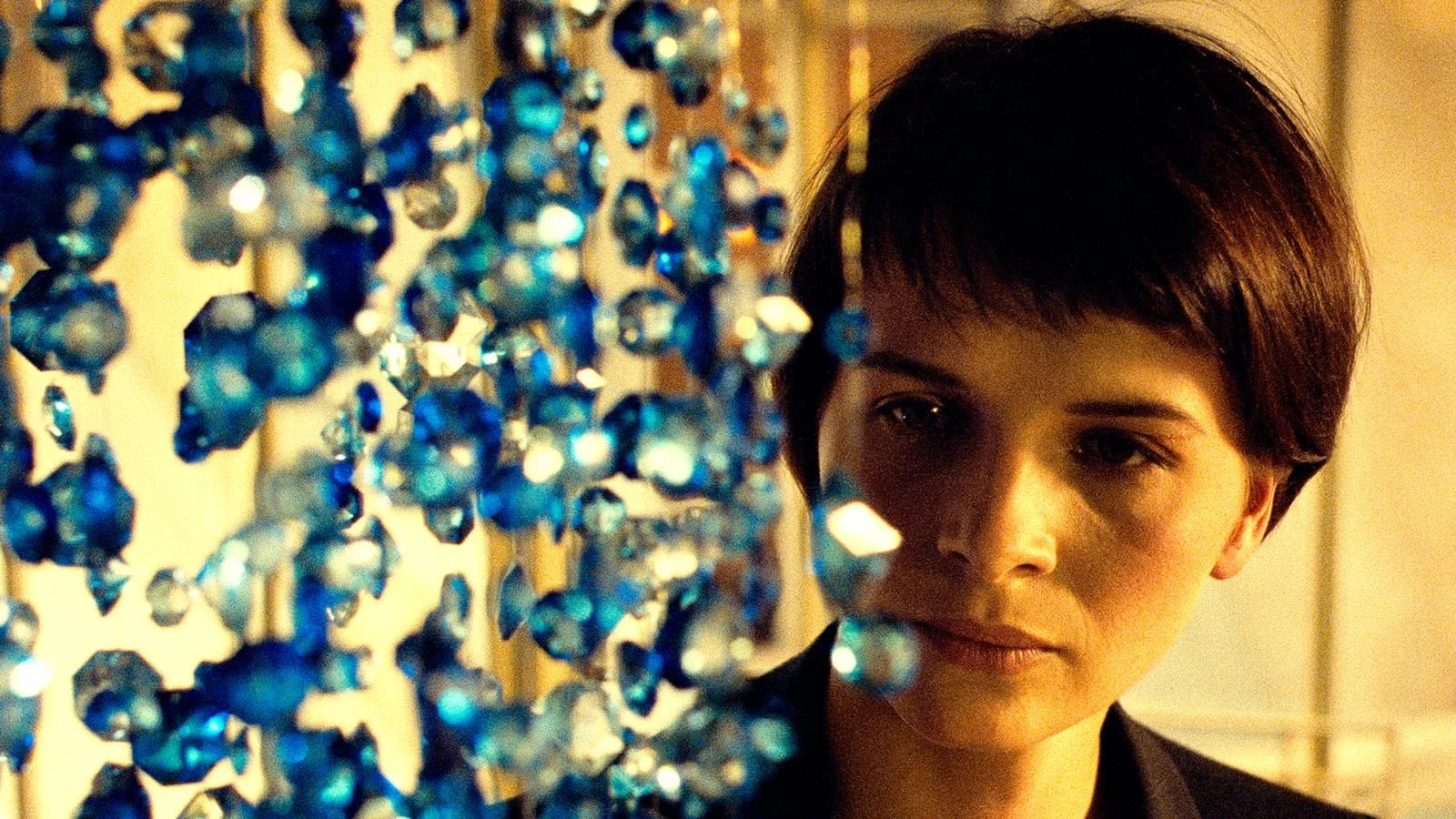
Look at the frame with the hanging blue glass. Julie’s face sits in warm light behind it. The blue occupies the foreground, close enough to interrupt our view. It feels less like a colour scheme than something between her and the rest of the room. Elsewhere, blue light floods the image; music arrives with the force of an interruption. Cinematographer Sławomir Idziak and composer Zbigniew Preisner give memory a way to intrude without somebody having to explain it.
That seems more interesting than assigning blue a single meaning and considering the matter settled. The same colour can belong to a small object you could put in a drawer, then fill the whole screen. The drawer would have been the easier option.
Juliette Binoche as Julie in Three Colours: Blue, directed by Krzysztof Kieślowski, 1993. Film frame: The Criterion Collection. Cinematography: Sławomir Idziak. Source